
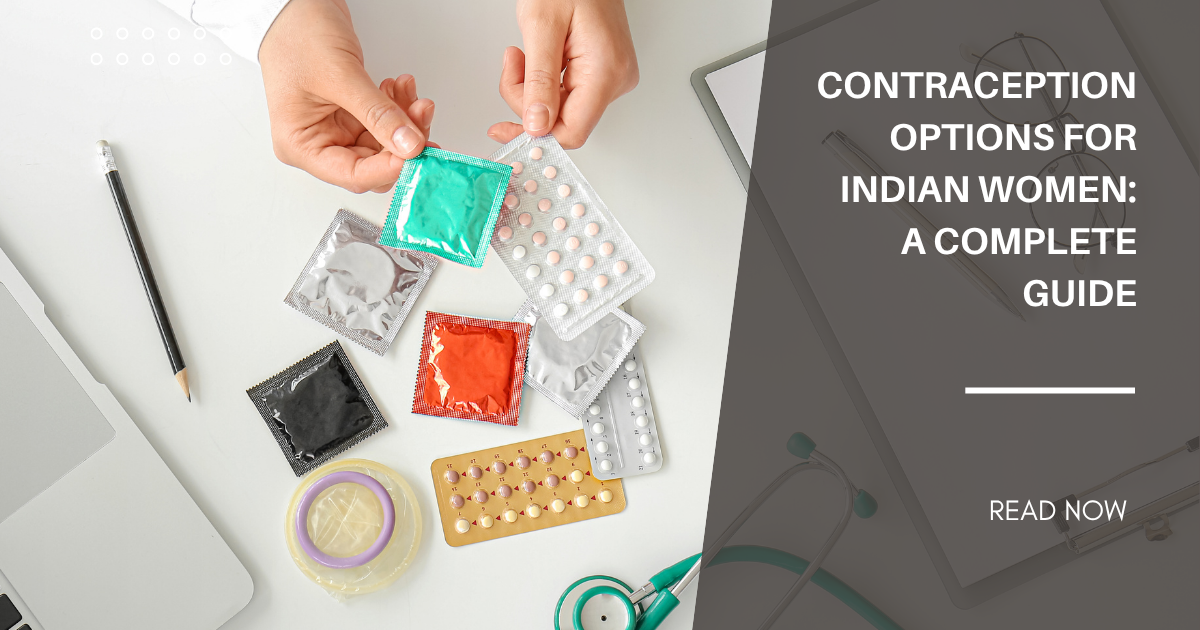
Contraception Options for Indian Women: A Complete Guide
Planning a family is one of the most personal decisions a woman or couple can make. Yet, conversations around contraception are often delayed, avoided, or influenced by incomplete information.
Some women hesitate to ask about birth control because they worry it may affect future fertility. Others continue using a method that no longer suits their lifestyle simply because they are unaware that other options exist. Many rely on advice from friends or relatives instead of discussing what may be medically appropriate for them.
It is also common to assume that contraception is only necessary after completing a family. In reality, women seek contraception at different stages of life for different reasons. Some wish to delay their first pregnancy while focusing on their education or career. Others want to space pregnancies to allow their body adequate time to recover after childbirth. Some may be looking for a long-term option that does not require daily attention, while others prefer a temporary method that can be discontinued whenever they are ready to plan a pregnancy.
There is no single birth control method that is considered the "best" for every woman. The most appropriate choice depends on factors such as age, overall health, reproductive plans, personal preferences, and lifestyle.
Understanding the available options allows women to make informed decisions instead of relying on myths or assumptions.
If you are exploring contraception options in Mumbai, looking for a family planning clinic in Ghatkopar, or trying to understand the best birth control method in India, this guide explains the different methods available, common misconceptions, and why personalised medical guidance remains important.
Why Conversations About Contraception Matter
Contraception is often discussed only when an unplanned pregnancy occurs, but it is actually an important part of reproductive healthcare.
Choosing a suitable contraceptive method is not simply about preventing pregnancy. It is about giving women and couples the opportunity to plan their families according to their health, personal goals, and individual circumstances.
For many women, pregnancy spacing is equally important. Allowing adequate time between pregnancies may help support maternal recovery and gives families time to adjust before planning another child. Others may need temporary contraception after childbirth while deciding when they would like to expand their family again.
Despite this, many women continue using methods that do not suit their needs because they feel uncomfortable discussing contraception openly.
The more informed these conversations become, the easier it is for women to choose a method that fits naturally into their lives rather than relying on trial and error.
Why Choosing Contraception Is a Personal Decision
No two women have exactly the same healthcare needs.
A method that works well for one person may not be suitable for another because every woman has a different medical history, lifestyle, and family planning goals.
For example, a newly married couple planning pregnancy within the next year may have different priorities compared to someone who wishes to delay pregnancy for several years. Similarly, a woman who has recently delivered a baby may need guidance that differs from someone who has never been pregnant before.
Age, menstrual patterns, existing medical conditions, medications, breastfeeding status, and future pregnancy plans are all factors that may influence which contraceptive methods are appropriate.
This is why contraception should always be viewed as an individual healthcare decision rather than a one-size-fits-all recommendation.
Contraception Options Available in India
Several contraceptive methods are available in India today, offering women and couples different levels of flexibility, duration, and convenience.
Broadly, these methods can be grouped into temporary and longer-term options.
Barrier Methods
Barrier methods work by preventing sperm from reaching the egg.
Male condoms remain one of the most commonly used contraceptive methods. Besides helping prevent pregnancy, they also play an important role in reducing the risk of certain sexually transmitted infections.
Female condoms are another barrier option, although they are less commonly used.
Barrier methods do not require long-term commitment and are generally used only during sexual intercourse.
Oral Contraceptive Pills
Oral contraceptive pills are another commonly used temporary contraceptive option.
These medications are taken according to a prescribed schedule and may be suitable for some women depending on their medical history and healthcare needs.
Because oral contraceptives may not be appropriate for everyone, they should only be started after discussing suitability with a qualified healthcare professional.
Intrauterine Devices (IUDs)
An intrauterine device (IUD) is placed inside the uterus by a trained healthcare professional.
Depending on the type of device used, an IUD may provide long-term contraception while remaining reversible if pregnancy is planned later.
Many women prefer this option because it does not require daily attention once inserted.
The suitability of an IUD depends on individual health factors, which is why proper consultation is important before choosing this method.
Injectable Contraception
Injectable contraception is another temporary option available for selected women.
Rather than taking a daily medication, injections are given at scheduled intervals under medical supervision.
Whether this method is appropriate depends on individual health considerations and reproductive plans.
Emergency Contraception
Emergency contraception is intended for specific situations, such as contraceptive failure or unprotected intercourse.
It is designed for occasional emergency use and should not be considered a regular method of contraception.
If emergency contraception is required repeatedly, it may indicate the need to discuss a more suitable long-term contraceptive option with a healthcare professional.
Permanent Contraception
Some couples who have completed their family may consider permanent contraception.
These procedures are intended for individuals who are certain they do not wish to plan future pregnancies.
Because permanent contraception is an important long-term decision, detailed counselling is usually recommended beforehand.
Short-Term vs Long-Term Contraception
One of the first questions women often ask is whether they should choose a temporary or longer-term contraceptive method.
The answer depends largely on future pregnancy plans.
Women who wish to conceive within a relatively short period may prefer temporary methods that can be discontinued when they decide to plan a pregnancy.
Others who are certain they wish to postpone pregnancy for several years may prefer longer-term options that require less frequent attention.
Rather than thinking in terms of which method is "better," it is often more helpful to consider which option fits comfortably into your current stage of life.
Common Myths About Birth Control
Contraception continues to be surrounded by misconceptions, many of which create unnecessary anxiety.
One common belief is that using contraception permanently affects fertility. This concern often discourages women from exploring suitable options even when they are not planning pregnancy.
Another misconception is that one contraceptive method is automatically suitable for every woman. In reality, the most appropriate choice depends on individual health, medical history, and reproductive goals.
Some women also believe contraception is only necessary after completing their family, while others assume discussing birth control before marriage is inappropriate.
Open conversations with a healthcare professional often help clarify these concerns and replace myths with reliable information.
Which Birth Control Method May Suit Different Lifestyles?
The most suitable contraceptive method often depends on how well it fits into everyday life.
A woman who prefers a method requiring minimal day-to-day attention may have different priorities compared to someone who would like a temporary option that can be stopped whenever pregnancy is planned.
Women who are breastfeeding, have recently delivered, have certain medical conditions, or are approaching menopause may also require different considerations.
Lifestyle factors, work schedules, travel, personal comfort, and long-term family planning goals all influence contraceptive choice.
Rather than asking, "Which is the best birth control method?", a more useful question is, "Which method is most appropriate for me?"
That answer is different for every woman.
Why Professional Guidance Matters
Online articles can provide general information about contraception, but they cannot assess individual health needs.
Two women of the same age may receive completely different contraceptive recommendations depending on their medical history, medications, menstrual health, reproductive plans, and personal preferences.
A consultation allows these factors to be discussed in detail so that the advantages, limitations, and suitability of each method can be explained clearly.
The aim is not simply to recommend contraception but to help women feel confident about the decision they are making.
Frequently Asked Questions
Which is the best birth control method?
There is no single method that is considered the best for everyone. The most appropriate option depends on your health, lifestyle, and future pregnancy plans.
Can contraception affect future fertility?
Different contraceptive methods work in different ways. If you have concerns about future fertility, discussing them during a consultation can help you choose an option that aligns with your reproductive goals.
Is contraception only for married women?
Women may seek contraception for different reasons depending on their healthcare needs and family planning decisions.
Should I choose a long-term contraceptive method?
This depends on whether you are planning pregnancy in the near future, your overall health, and your personal preferences.
Is it advisable to change contraceptive methods?
Some women may choose to change methods over time as their health needs or family planning goals evolve. This decision should ideally be guided by medical advice.
When Should You Consult a Gynaecologist?
It may be helpful to seek medical guidance if you:
- Are planning to start contraception for the first time.
- Wish to delay or space pregnancies.
- Recently had a baby and want to discuss family planning.
- Are unsure which contraceptive method may suit you.
- Have concerns or questions about your current birth control method.
- Want to understand temporary and long-term contraception options before making a decision.
Consult Dr. Prabhjot Manchanda for Personalised Family Planning Guidance
Choosing a contraceptive method is an important personal decision, and the right option is one that fits your health needs, lifestyle, and future pregnancy plans.
Whether you are considering contraception for the first time, planning to space pregnancies, or looking for guidance regarding available contraception options in Mumbai, you can visit our centre in Ghatkopar East under the care of Dr. Prabhjot Manchanda for personalised family planning guidance, contraceptive counselling, and women's health care tailored to your individual needs.