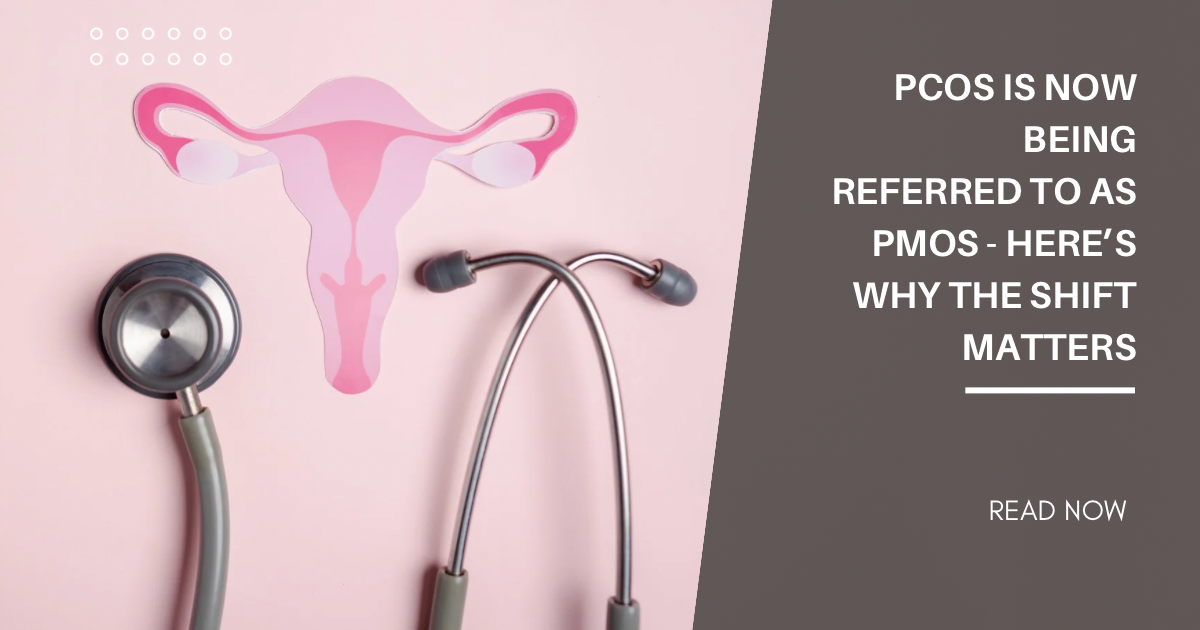
PCOS Is Now Being Referred to as PMOS - Here's Why the Shift Matters
For many women, the term PCOS has always sounded familiar, but not necessarily fully understood.
Some associate it mainly with irregular periods. Others connect it with acne, weight changes, difficulty conceiving, or ovarian cysts. Over the years, the condition has often been spoken about largely from a reproductive health perspective, especially among women trying to understand menstrual irregularities or fertility-related concerns.
At the same time, living with PCOS rarely feels limited to just one symptom or one part of the body.
Many women spend years feeling that "something feels off" long before they fully understand what may actually be contributing to the changes they are experiencing physically, emotionally, or hormonally. Some struggle with unexplained fatigue. Others experience persistent acne, gradual weight changes, irregular cycles, mood fluctuations, or difficulty understanding why their body no longer feels predictable in the way it once did.
This is one of the reasons the recent global discussion around referring to PCOS as PMOS has gained significant attention within women's healthcare and endocrinology.
The proposed term - Polyendocrine Metabolic Ovarian Syndrome (PMOS) - reflects a broader understanding of the condition and the multiple systems it may involve beyond the ovaries alone.
While the terminology continues to evolve internationally, the conversation itself is important because it highlights something many doctors and patients have recognised over time: the condition has often been far more layered than the older terminology initially suggested.
Why the Existing Terminology Has Been Reconsidered
The term Polycystic Ovarian Syndrome has been used for decades, but concerns around the terminology have gradually become part of larger global medical discussions.
One of the major reasons behind this shift is that many women diagnosed with PCOS do not necessarily present with ovarian cysts. At the same time, the condition may involve much broader hormonal and metabolic patterns that extend beyond reproductive health alone.
Women diagnosed with PCOS may experience:
- irregular ovulation
- hormonal imbalance
- insulin resistance
- acne and skin-related concerns
- hair-related changes
- menstrual irregularity
- metabolic disturbances
- fertility-related concerns
Over time, discussions began emerging around whether the older terminology unintentionally narrowed public understanding of the disorder itself.
For many women, the diagnosis became associated mainly with "cysts" or periods, even though the condition often involves far more complex endocrine and metabolic interactions internally.
This is one reason the proposed shift toward PMOS is now being discussed more widely across global women's healthcare conversations.
Understanding What PMOS Represents
The proposed term Polyendocrine Metabolic Ovarian Syndrome attempts to acknowledge the broader endocrine and metabolic nature of the condition more clearly.
The word "polyendocrine" reflects the involvement of multiple hormonal pathways, while "metabolic" brings attention toward the metabolic patterns and insulin-related concerns that are commonly seen in many women diagnosed with the condition.
Importantly, this discussion does not mean the condition itself is suddenly new or entirely different from before. Rather, it reflects a growing effort to describe the disorder in a way that aligns more closely with how it is currently being understood clinically and scientifically.
Across women's healthcare globally, there is increasing recognition that reproductive health, hormonal health, metabolic health, and long-term wellbeing are deeply interconnected rather than functioning independently from one another.
Many women experience PCOS beyond "Period Problems".
One of the reasons this conversation matters is because many women with PCOS spend years trying to understand symptoms that may initially appear unrelated.
Some seek consultation because of irregular cycles. Others because of acne that persists despite treatment. Some struggle with gradual weight changes that feel difficult to manage despite lifestyle efforts. Others seek medical guidance only later during fertility evaluation after months or years of difficulty conceiving.
In many situations, symptoms develop slowly over time rather than appearing suddenly. Because of this gradual progression, women often adapt to symptoms quietly before fully recognising that there may be an underlying hormonal pattern contributing to them.
Some women are repeatedly told:
- "It's probably stress."
- "Hormonal changes are common."
- "Weight fluctuations happen."
- "Periods become irregular sometimes."
And while mild hormonal variation can certainly happen, persistent symptoms often deserve a more structured evaluation instead of being continuously normalised or overlooked.
For many women, the emotional frustration often comes not only from the symptoms themselves, but from how long they remain misunderstood.
Women may spend years moving between dermatology consultations for acne, attempting restrictive diets for weight management, trying supplements independently, or constantly changing routines in the hope that symptoms will settle naturally. Some continue adjusting to irregular cycles for years because they assume that delayed periods are simply "part of their body type" or lifestyle.
This gradual normalisation is one reason delayed diagnosis becomes so common.
The condition often develops slowly, subtly, and differently from one woman to another. There is no single "standard" presentation that every woman experiences in the same way.
This is where the broader PMOS discussion becomes meaningful.
It encourages women's hormonal health to be viewed more comprehensively rather than reducing the condition only to ovarian findings or irregular periods alone.
The Metabolic Aspect Deserves More Attention
For many years, public conversations around PCOS remained heavily centred around menstrual health and fertility. However, the metabolic component of the condition is increasingly becoming part of larger healthcare discussions globally.
Insulin resistance is commonly associated with PCOS in many women and may influence:
- weight regulation
- ovulation
- energy levels
- hormonal balance
- metabolic health patterns
This is one reason many women often describe feeling frustrated when symptoms continue despite efforts toward diet control, exercise, or healthier lifestyle habits.
The condition is not always experienced simply as a "lifestyle issue." Hormonal and metabolic pathways may influence how symptoms develop and persist over time.
At the same time, conversations around metabolic health in women are often delayed until visible symptoms begin interfering with daily life.
Many women may not initially connect symptoms like fatigue, persistent cravings, difficulty managing weight, low energy levels, irregular periods, or skin changes with a larger hormonal and metabolic pattern occurring internally.
This is also why awareness around hormonal health requires a broader approach rather than viewing symptoms separately in isolation.
Increasingly, doctors globally are recognising that reproductive health conversations cannot always remain disconnected from metabolic health discussions. The body's hormonal pathways are deeply interconnected, and symptoms often overlap rather than exist independently.
This growing recognition of endocrine and metabolic involvement is one of the key reasons the PMOS terminology is receiving increasing global attention.
Why Delayed Diagnosis Is Common
Hormonal symptoms in women are not always identified early.
Irregular periods, acne, hair-related changes, fatigue, or unexplained weight fluctuations are often dismissed as temporary stress-related concerns, work pressure, poor sleep, or lifestyle imbalance. In many situations, women continue adjusting to symptoms for years before eventually seeking specialist evaluation.
Some women first undergo evaluation during fertility consultations. Others are diagnosed much earlier because of severe menstrual irregularities, acne, or metabolic concerns during adolescence or young adulthood.
At the same time, many women also become accustomed to functioning despite ongoing symptoms. Constant fatigue, cycle unpredictability, mood changes, or physical discomfort may gradually start feeling "normal" simply because they have been present for so long.
This tendency to normalise symptoms is particularly common among women balancing demanding routines, work stress, family responsibilities, or emotionally exhausting schedules. Women often continue functioning through discomfort rather than pausing to evaluate whether their symptoms deserve deeper hormonal assessment.
Social media can also sometimes add to confusion. Women are constantly exposed to conflicting information around hormonal health, supplements, diets, exercise trends, or "quick fixes" for PCOS, which may create unrealistic expectations or misinformation around treatment and recovery.
This is one reason awareness around hormonal health remains important. Earlier recognition often allows women to better understand what their body may be trying to communicate instead of spending years feeling confused by symptoms that never fully settle.
The Emotional Impact Often Remains Invisible
Conversations around PCOS frequently focus on laboratory values, ultrasound findings, or fertility-related discussions. However, the emotional experience of living with the condition is often much less openly discussed.
Symptoms such as:
- acne
- facial hair growth
- scalp hair thinning
- weight fluctuations
- irregular periods
- fertility-related uncertainty
may gradually begin affecting confidence, body image, emotional wellbeing, and overall quality of life over time.
Many women also describe feeling emotionally exhausted from constantly trying to "fix" symptoms that seem to fluctuate unpredictably. Some spend years experimenting with diets, skincare treatments, exercise routines, supplements, or lifestyle changes while still struggling to feel fully in control of their hormonal health.
For younger women especially, symptoms such as acne, hair thinning, or sudden weight fluctuations may begin affecting self-confidence quite early. Some women withdraw socially, avoid photographs, become uncomfortable discussing their symptoms openly, or quietly struggle with body image concerns that are rarely spoken about during routine consultations.
In fertility-related situations especially, the emotional burden can become even heavier. Questions around ovulation, conception, pregnancy planning, or future reproductive health may create ongoing anxiety for many women.
The uncertainty surrounding hormonal conditions can often feel emotionally draining because symptoms may fluctuate over time rather than follow a predictable pattern. Some women feel reassured temporarily when cycles improve, only to feel discouraged again when symptoms return later.
This is one reason structured guidance, continuity of care, and long-term hormonal health conversations become important while managing hormonal health concerns.
Does the Shift to PMOS Change Treatment?
At present, the proposed terminology shift does not completely change treatment approaches overnight.
Women currently diagnosed with PCOS should not assume their condition itself has suddenly changed.
The broader significance of this discussion lies more in improving understanding around the condition and acknowledging its endocrine and metabolic implications more clearly.
Management continues to depend on several individual factors, including:
- menstrual patterns
- hormonal profile
- metabolic health
- reproductive goals
- symptom severity
- lifestyle patterns
- fertility planning
Treatment recommendations may therefore vary significantly from one woman to another depending on her symptoms and overall health profile.
Some women may require more focus on menstrual regulation, while others may need metabolic health monitoring, ovulation-related guidance, lifestyle modifications, or structured long-term hormonal management depending on their clinical situation.
This is also why comparison between women with PCOS can often become misleading. One woman's symptoms, investigations, or treatment journey may look entirely different from another's despite both being diagnosed within the same spectrum of hormonal imbalance.
Why Terminology Matters in Healthcare
Medical terminology influences more than diagnosis alone.
It also shapes:
- public understanding
- awareness
- patient perception
- seriousness associated with the condition
- how symptoms are interpreted
- how conversations happen around women's health
For years, many women associated PCOS mainly with "ovarian cysts," even though their lived experience of the condition often involved much more than that.
Terminology also influences how seriously conditions are perceived socially. When women hear terms repeatedly associated only with periods or ovarian cysts, the broader hormonal and metabolic implications may unintentionally receive less attention.
The proposed PMOS terminology attempts to encourage a broader understanding of hormonal and metabolic health rather than limiting the conversation only to reproductive symptoms.
And perhaps that is why this discussion matters beyond terminology itself.
Women's Health Conversations Are Evolving
The growing global discussion around PMOS reflects a larger shift happening within women's healthcare overall.
There is increasing recognition that hormonal health, metabolic health, menstrual health, fertility, emotional wellbeing, and long-term health outcomes are deeply interconnected.
Women's healthcare conversations are gradually becoming more comprehensive, more multidisciplinary, and more focused on understanding symptoms within a larger hormonal and metabolic context.
The current PMOS discussion is part of that wider evolution.
And perhaps the most important takeaway from this shift is this:
PCOS has rarely been experienced by women as only an ovarian condition alone. The broader conversations happening around PMOS today are helping bring that deeper understanding into clearer focus.
As awareness around women's hormonal health continues evolving globally, conversations are gradually moving toward earlier recognition, better patient understanding, and more holistic long-term care approaches instead of symptom-based treatment alone.
And for many women, that shift in understanding may ultimately matter just as much as the terminology itself.
Consult a Gynaecologist for PMOS (Earlier Known as PCOS) Evaluation
Irregular periods, hormonal imbalance, unexplained weight changes, acne, hair-related changes, or fertility concerns should not be ignored simply because they are common.
Structured evaluation and timely guidance can help women better understand their hormonal health and long-term wellbeing.
If you are experiencing symptoms related to PMOS (earlier known as PCOS) or hormonal imbalance, you can visit our centre in Ghatkopar East under the care of Dr. Prabhjot Manchanda for personalised evaluation, women's health guidance, and long-term hormonal care tailored to your individual health needs.